|
Cantrill SV, Brown MD. Clinical policy: Critical issues in the evaluation and management of adult patients with suspected acute nontraumatic thoracic aortic dissection. Ann Emerg Med. 2015;65:32-42. Evangelista A, Isselbacher EM, Bossone E, et al. Insights from the International Registry of Acute Aortic Dissection. Circulation. 2018;137(17):1846-1860. Hiratzka LF, Bakris GL, et al. American College of Cardiology Foundation/American Heart Association Task Force on Practice Guidelines; American Association for Thoracic Surgery; American College of Radiology; American Stroke Association; Society of Cardiovascular Anesthesiologists; Society for Cardiovascular Angiography and Interventions; Society of Interventional Radiology; Society of Thoracic Surgeons; Society for Vascular Medicine. 2010 ACCF/AHA/AATS/ACR/ASA/SCA/SCAI/SIR/STS/SVM Guidelines for the diagnosis and management of patients with thoracic aortic disease. A Report of the American College of Cardiology Foundation/American Heart Association Task Force on Practice Guidelines, American Association for Thoracic Surgery, American College of Radiology, American Stroke Association, Society of Cardiovascular Anesthesiologists, Society for Cardiovascular Angiography and Interventions, Society of Interventional Radiology, Society of Thoracic Surgeons, and Society for Vascular Medicine. J Am Coll Cardiol. 2010 Apr 6;55(14):e27-e129. doi: 10.1016/j.jacc.2010.02.015. Erratum in: J Am Coll Cardiol. 2013 Sep 10;62(11):1039-40. PMID: 20359588. Levy D, Goyal A, Grigorova Y, et al. Aortic Dissection. [Updated 2023 Apr 23]. In: StatPearls [Internet]. Treasure Island (FL): StatPearls Publishing; 2024 Jan-. Available from: https://www.ncbi.nlm.nih.gov/books/NBK441963/. Mokashi SA, Svensson LG. Guidelines for the management of thoracic aortic disease in 2017. Gen Thorac Cardiovasc Surg. 2019;67(1):59-65. |
|
This is intended solely as reference material and is not a recommendation for any specific patient. The practitioner must rely upon his or her own professional judgment and medical decision-making to determine whether it is relevant in a particular case. Materials are derived from medical and nursing texts, medical literature and national guidelines and should not be considered complete or authoritative. Users must rely on specific patient presentation, experience and judgment when utilizing any of the information contained herein relative to an actual patient. |
| © 2008 - |
|
||
|
|
|
Definitions Pathophysiology Key History Key Physical Exam Risk Factors for AAD / AoD Classification Systems Differential Diagnosis Laboratory & Imaging |
||||||||||||||
DefinitionsAcute Aortic Syndromes:
Timing of Onset of Initial Symptoms to Presentation
Thoracoabdominal Aneurysm (TAA): Aneurysm involving the acute and abdominal aorta |
||||||||||||||
| Back To Top | ||||||||||||||
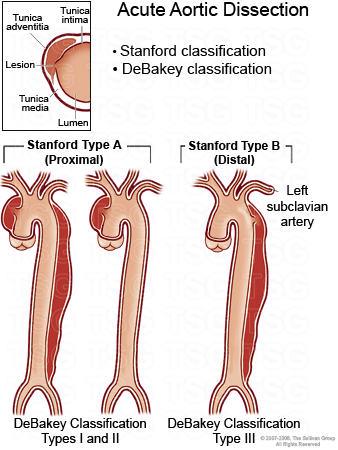
PathophysiologyThe aorta, like most other arteries, consists of three layers: the intima, the media, and the adventitia. Aortic dissection involves separation of the intima from the adventitia within the aortic wall by a dissecting column of blood propagating through the media via longitudinal cleavage. Once the dissecting hematoma is established in the media of the aorta, migration can occur either in an antegrade or retrograde fashion, creating a false lumen within the outer half of the media. The dissection progresses until it ruptures, either back into the true lumen resulting in a "double barrel" aorta and a rare "spontaneous cure," or more commonly, the dissection may rupture out of the adventitia into the pericardium or pleural cavity. The majority of deaths from aortic dissection are due to rupture of the aorta into the pericardium with subsequent death due to tamponade, or rupture into the pleural cavity with death due to exsanguination. The severity of the dissection is proportional to the blood pressure and the velocity of ventricular contraction. This fact is utilized in the initial medical treatment of aortic dissection. The most common site of dissection is the first few centimeters of the ascending aorta, with 90% occurring within 10 centimeters of the aortic valve. The second most common site is just distal to the left subclavian artery. Between 5% and 10% of dissections do not have an obvious intimal tear. Location: 65% in ascending aorta; 10% in aortic arch; 25% in descending aorta (upper portion) |
||||||||||||||
| Back To Top | ||||||||||||||
Key History
|
||||||||||||||
| Back To Top | ||||||||||||||
Key Physical Exam |
||||||||||||||
|
||||||||||||||
| Back To Top | ||||||||||||||
Risk Factors for Development of Acute Aortic Dissection |
||||||||||||||
Conditions Associated With Increased Aortic Wall Stress
|
||||||||||||||
| Back To Top | ||||||||||||||
AoD Graphic |
||||||||||||||
|
||||||||||||||
| Back To Top | ||||||||||||||
Classification Systems |
||||||||||||||
|
||||||||||||||
| Type A = Surgical emergency w/mortality 15%-20%; if medically treated, 70%-80%; Type B managed medically, 11% | ||||||||||||||
|
||||||||||||||
| Back To Top | ||||||||||||||
Differential Diagnosis |
||||||||||||||
|
||||||||||||||
| Back To Top | ||||||||||||||
Laboratory & Imaging |
||||||||||||||
|
||||||||||||||
| Back To Top | ||||||||||||||